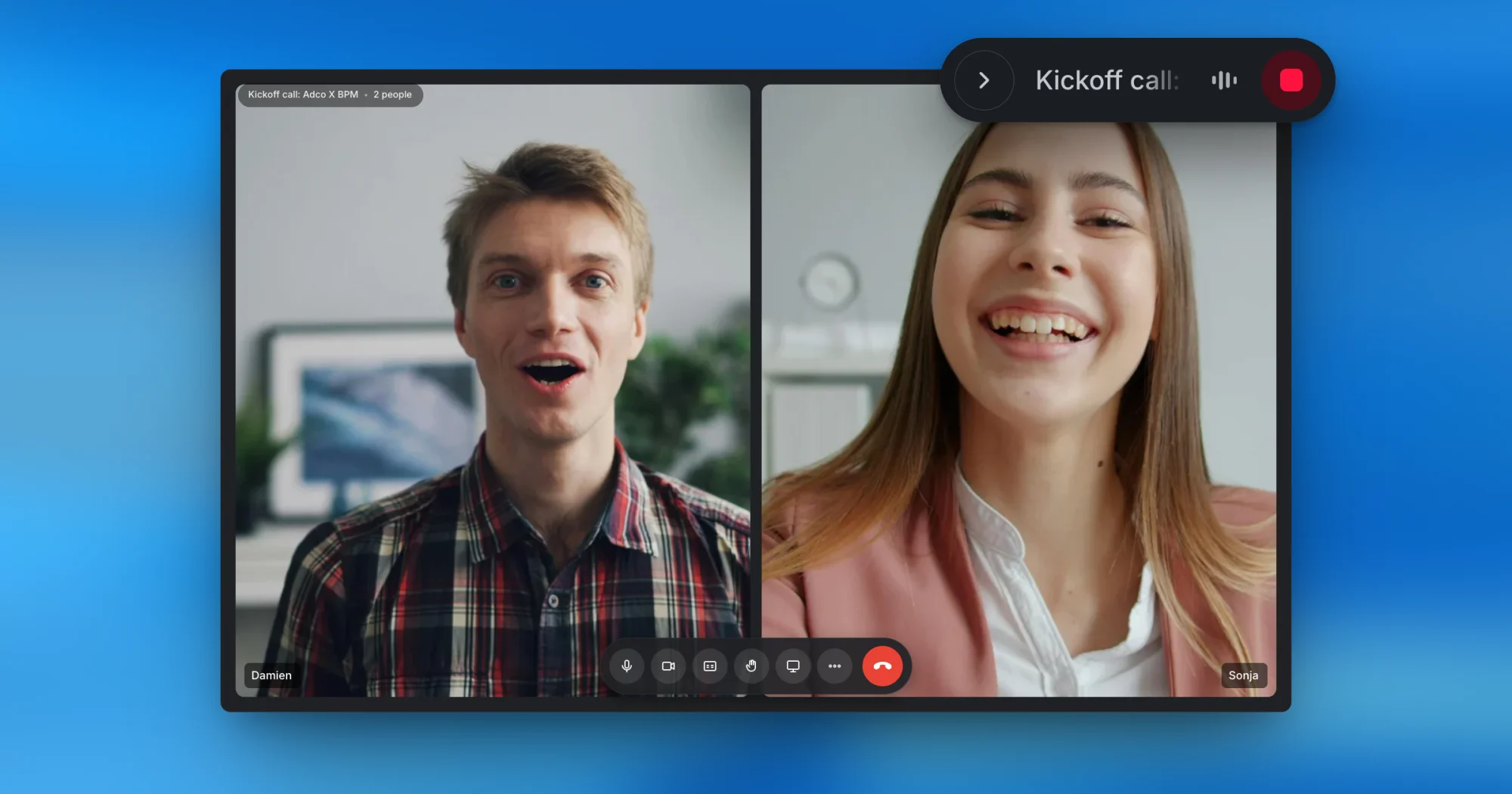


It's easy to cringe just thinking about it. A misread brief, a vague line in an email, a kickoff call where everyone walked away with a different version of the plan. The wires cross, the work stalls, and someone ends up redoing it on their own time.
In an agency, the stakes are higher than in most workplaces. You are not just coordinating internally, you are managing several demanding clients at once, on deadlines, against a margin. When communication breaks down on client work, it costs billable hours, eats into that margin, and chips away at the client trust you worked hard to earn.
So what does miscommunication look like in an agency, why does it hit client-facing teams so hard, and what can you actually do about it? Here is a practical guide, with real examples and fixes you can put to work this week.
What miscommunication at work really is
At its core, miscommunication happens when the message someone means to send is not the message that lands. The person writing or speaking and the person reading or listening end up on different pages. Details get lost, intent gets garbled, and assumptions fill the gaps.
In an agency, where context moves fast between account leads, creatives, strategists, and clients, it shows up in a few familiar forms:
A brief or message that is not clear in the first place
Important details from a client call left out of the write-up
Words or phrases that the client and the team read differently
Different communication styles between departments or with the client
Assuming knowledge the other person, or the client, does not have
The handoff between people that drops context along the way
Cultural and tonal differences across clients and markets
The result is always the same. The original intent does not get through, and people end up working from different understandings rather than a shared one. On client work, that gap turns into rework, missed scope, and awkward conversations you would rather avoid.
What miscommunication costs an agency
When account teams, creatives, and clients are not aligned, the fallout adds up fast.
Lost hours and thinner margins
When a brief is unclear or a key detail slips through, you spend billable time going back and forth to get clarity. That is time you cannot bill twice. As SHRM reports, a survey of 400 companies with 100,000 employees each cited an average loss per company of $62.4 million per year because of inadequate communication to and between employees.
Missed deadlines and derailed projects
Without a shared understanding of goals, timelines, and who owns what, work drifts off course. The classic cautionary tale is NASA's Mars Climate Orbiter, launched in 1998 and lost in 1999 when one team worked in metric units and another in US customary units, and no one caught the mismatch. Agency timelines rarely involve spacecraft, but the pattern is the same: a small unspoken assumption snowballs into a big, expensive miss.
Strained client relationships
Miscommunication erodes trust on both sides. A client who feels misheard, or a team that feels jerked around by shifting direction, starts to lose confidence in the partnership. The same dynamic that creates long-standing tension between coworkers plays out across the agency-client line.
Burned-out, disengaged teams
Being out of the loop and constantly cleaning up avoidable confusion is draining. Gallup research has found that about one in two U.S. employees have left a job at some point to get away from their manager. Chronic miscommunication is often part of that story.
The good news: while you will never eliminate miscommunication entirely, you can sharply reduce how often it happens and how much it costs you when it does.
Five ways miscommunication shows up on client work
The patterns are easier to spot once you have names for them.
The vague brief and the undocumented ask
A brief lands missing the why behind it, or the must-haves the client only mentioned out loud on a call that no one wrote down. The team interprets it three different ways, and the first round comes back off-target. Worse is the "quick question" that was never a quick question: a small verbal ask that balloons into hours of work because the original scope was never documented clearly. Agencies routinely lose a chunk of margin to revisions that started life as an offhand comment on a call. When the conversation is not written down, there is nothing to point back to when the ask quietly triples in size.
The derailed kickoff
A kickoff call starts, but it becomes clear no one shared the same picture of scope. Some people are talking about the campaign, others about a feature the client mentioned in passing, and the meeting ends with no decisions and no clear next steps. Everyone leaves busy and none the wiser.
The conflicting numbers
A client deck goes out with figures that do not match, because two people pulled from different versions of the data. The error surfaces in front of the client, and suddenly you are defending your accuracy instead of presenting your thinking.
The update half the team missed
A client mentions a shifted deadline on a quick call with the account lead. The rest of the team never hears it, keeps working to the old timeline, and finds out too late. Duplicated effort, a scramble, and a client wondering why the left hand did not know what the right was doing.
The cross-client mix-up
When your team juggles several accounts, context bleeds. A tone or assumption from one client shows up in another's work, or a name gets crossed in an email. Small slips, but they read as careless to the client on the receiving end.
Different triggers, same root cause: people working from different information, or no shared record of what was actually said and agreed.
How to keep client communication clear
You cannot personality-fix your way out of miscommunication. What works is building systems that make clarity the default.
Set communication protocols
Agree on how briefs, agendas, status updates, and decisions get documented and shared, then stick to it. Shared templates and a consistent home for client information mean everyone knows where to look. The best client meetings already follow a rhythm: our guide to making every client meeting count walks through the structure that keeps calls on track.
Practice active listening
In back-to-back days it is easy to plan your reply instead of absorbing what the client actually said. Good listening is active, not passive. As HBR's Amy Gallo explains in the video below, nodding along and repeating back what you heard is not enough: asking good questions is what signals to a client that you not only heard them but understood enough to want more detail. Slow down, ask clarifying questions, and reflect the request back to confirm you have it right.

Confirm understanding in writing
After a client call, send a short recap: what was decided, who owns what, and by when. The same HBR guidance notes that people remember only a small fraction of what they hear, so when a client can read along as well as listen, far more of it sticks. A two-line confirmation also closes the gap between "what I think you meant" and "what you actually meant" before it becomes rework.
Build psychological safety
When people feel able to ask questions, flag concerns, and admit they are not sure without fear of looking foolish, problems surface early instead of festering. Google's research identified psychological safety as the top factor in its highest-performing teams.
Stop choosing between a call and a written record
Here is the trap most agencies fall into: people default to a call instead of writing things down, because documenting every conversation feels like work no one has time for. So the context lives in someone's head, their inbox, or a call no one wrote up, and the chaos compounds every week. The fix is not "have fewer calls" or "force everyone to take better notes." It is making the written record a by-product of the conversation you were already going to have. When every call, decision, and action item lands in one place the whole team can reference, the "wait, what did we say on that call?" moments disappear, and there is no longer a trade-off between talking it through and having it documented. This is where AI and meetings change the math: instead of relying on memory or hurried notes, the record writes itself.
How Supernormal keeps client work on the same page
Supernormal is an AI meeting assistant and set of agents built for agencies. It takes notes on your client calls without a bot joining, transcribes the conversation, and logs the decisions and action items, so nothing important rides on someone remembering it later.
From there, it uses that context to do the work that usually causes the crossed wires. The follow-up recap, the client brief, the status update, the proposal: drafted in moments from what was actually said, in your team's voice, ready to polish and send. Because every call lives in one place you can organize by client or project, the whole team draws from the same record. Everyone stays on the same page, automatically.
The point is not to add another tool to check. It is to close the two gaps where miscommunication does the most damage on client work: important details slipping through, and different people working from different information. Your team spends less time documenting and chasing clarity, and more time on the creative and strategic work clients actually pay for. Stop doing, start reviewing.
Closing the gap
Miscommunication in the workplace is one of those quiet costs that rarely shows up on an invoice but shows up everywhere else: in rework, in slipped deadlines, in client trust that takes a hit. For agencies, getting it under control is not a soft skill. It is margin.
Set clear protocols, listen actively, confirm in writing, and keep one shared record of what was said and agreed. Do that consistently and you cut both how often wires cross and how much it costs you when they do. Supernormal takes care of the record and the routine client work that comes out of it, so your team can focus on the thinking only people can do.
Ready to keep every client on the same page? Supernormal takes notes on your meetings without a bot, then turns them into the client work you need, in a flash. Try Supernormal, the bot-free notetaker and AI assistant for agencies.